Posts

Showing posts with the label BSc

Phylum Chordata : Part 2
Image
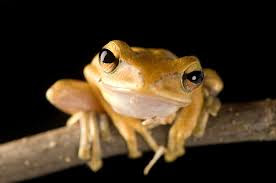
                                       Phylum - Chordata               Class Amphibia  As the name indicates (Gr., Amphi : dual, bios, life), amphibians can live in aquatic as well as terrestrial habitats. Most of them have two pairs of limbs. Body is divisible into head and trunk. Tail may be present in some. The amphibian skin is moist (without scales). The eyes have eyelids.  A tympanum represents the ear. Alimentary canal, urinary and reproductive tracts open into a common chamber called cloaca hich opens to the exterior. Respiration is by gills, lungs and through skin. The heart is threechambered (two auricles and one ventricle). These are cold-blooded animals. Sexes are separate. Fertilisation is external. They are oviparous and development is indirect. Earliest amphibians - Ichthyostega basically a fish wi...

Overview On Phylum Chordate - Biology Blog

Image
                                       Phylum Chordata dorsal, hollow nerve cord – becomes the brain   spinal cord notochord   - flexible, fibrous rod along the back (replaced by vertebrae in advanced vertebrates) pharyngeal gill slits - openings in the throat region. postanal tail – most other animals with tails near the anus have anus at end of the tail. T hese features may each be lost or altered in the adult. This phylum has three subphyla: 1. Cephalochordata, 2. Urochordata, and 3. Vertebrata 1. Subphylum Cephalochordata (clade) – lancelets fishlike creatures that bury selves in mud and filter feed all four key chordate feature present in adults like vertebrates, muscles broken up into bands called myomeres (body segmentation) essentially no brain in adults Ex.- Urochordata – Ascidia, Salpa, 2. Subphylum Urochordata...

Vitamins In Biology - Definition, Classification , Types , Function

Image
    Vitamins are those organic compounds that are recommended in a very short amount in diet however their deficiency turns into a  specific disease.  The term “Vitamine” was coined from the word vital + amine since the earlier identified compounds had amino groups. Later work showed that most of them did not contain amino groups, so the letter ‘e’ was dropped and the term vitamin is used these days.  They are generally present in our food which we have taken for nutrition. · Maximum vitamins cannot be synthesized in our body on the other hand plants can synthesize almost all of them, so they are considered to be an essential food factor. · In our body, some of the vitamins which we are needed are secreted by the bacteria of the gut. ·  Different vitamins belong to various chemical classes. · A  small amount of vitamins used to perform specific biological functions in our body like the growth and health of the organ...

Carbohydrates Classification , Structure , Sources With Example

Image
                                         Carbohydrate         Carbohydrate is one of the main biomolecules present in our body in the form of sugar ( glucose ), starch & fiber.  Besides providing energy to all over the body, carbohydrates play a significant role in many cellular activities. Carbohydrates are simply the combination of carbon, hydrogen, oxygen. They are also known as " the derivatives of aldehyde and ketone ." The general formula of carbohydrates is CN(H 2 O)N . In biochemistry the word carbohydrate is known by another name - Saccharide means sugar molecules. On the basis of the composition of sugar, molecules carbohydrate is divided into the following parts - 1. Monosaccharides - Here the word Mono means single& saccharide means sugar molecules & hence the term Monosaccharides. Monosaccharides are the molecu...

Western Blotting - Principle , Method & Diagram

Image
                                      Western Blotting Western blotting is a type of blotting which is used for identifying particular protein from a sample by using an antibody specific to that protein. This technique was developed by Towbin and his co-worker in 1979. This technique is also known by another name Immunoblot . In this method nitrocellulose and nylon, the membrane is used for blotting. Sometime Polyvinylidene fluoride is also used for blotting purposes. The probe used is an antibody to detect a specific protein. The positive signal indicates that the protein of interest is present in the given sample. The antibody is labeled with radioactive material so that it produces light after combining it with the enzymes. Detection -  Western blotting can be detected in two ways - Direct Detection -  Primary antibody which is made up of purifying the desired pro...