Posts

Showing posts with the label Msc

Phylum Chordata : Part 2
Image
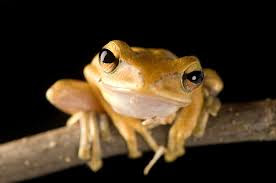
                                       Phylum - Chordata               Class Amphibia  As the name indicates (Gr., Amphi : dual, bios, life), amphibians can live in aquatic as well as terrestrial habitats. Most of them have two pairs of limbs. Body is divisible into head and trunk. Tail may be present in some. The amphibian skin is moist (without scales). The eyes have eyelids.  A tympanum represents the ear. Alimentary canal, urinary and reproductive tracts open into a common chamber called cloaca hich opens to the exterior. Respiration is by gills, lungs and through skin. The heart is threechambered (two auricles and one ventricle). These are cold-blooded animals. Sexes are separate. Fertilisation is external. They are oviparous and development is indirect. Earliest amphibians - Ichthyostega basically a fish wi...

Overview On Phylum Chordate - Biology Blog

Image
                                       Phylum Chordata dorsal, hollow nerve cord – becomes the brain   spinal cord notochord   - flexible, fibrous rod along the back (replaced by vertebrae in advanced vertebrates) pharyngeal gill slits - openings in the throat region. postanal tail – most other animals with tails near the anus have anus at end of the tail. T hese features may each be lost or altered in the adult. This phylum has three subphyla: 1. Cephalochordata, 2. Urochordata, and 3. Vertebrata 1. Subphylum Cephalochordata (clade) – lancelets fishlike creatures that bury selves in mud and filter feed all four key chordate feature present in adults like vertebrates, muscles broken up into bands called myomeres (body segmentation) essentially no brain in adults Ex.- Urochordata – Ascidia, Salpa, 2. Subphylum Urochordata...

What are Mollusc : Biology Blog

Image
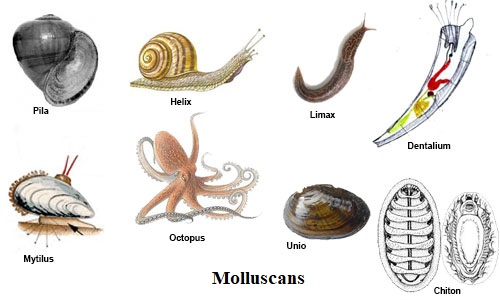
                          Phylum Mollusca (clade) – mollusks  very successful phylum: over 93,000 named, living species The largest number of living species for animals after Arthropoda  mostly aquatic, but over 35,000 terrestrial species (more than all terrestrial vertebrates)  includes snails, slugs, clams, oysters, chitons, cuttlefish, octopi, etc.  from microscopic to 21 m (giant squid – largest invertebrate)  economically important (food, ornamentation, currency, pests)  Defining Characteristics Of Mollusks:   Bilateral symmetry with true coelom ; usually have a differentiated head unsegmented (some argument as to whether lost during evolution or never present in phylum)   Three main body parts : muscular foot, visceral mass, and mantle muscular foot – used for locomotion, food capture, attachment  · may be solid or have tentacles or maybe a “wing” ...