Posts

Showing posts from June, 2016

The Significance of Food Webs for Environmental Balance | Biology Blog

Image
                                         Food Web  Food web is generally a interconnection of food chain in a graphical manner to show who eat whom is called Food Web . This web shows the  description of feeding connection between the organisms . Energy is passes from one tropic level to another level by this food web links  . For example -  A rat can feed on grains , roots , stems . A rat in turn consumed by snake which is then eaten by another organisms like eagal . The snakes can feed upon both the rat and frogs . In this way there is a connection of food chain from one another and this process is called Food Web . Importance -   Through various trophic levels, from primary producers to top predators, they offer a mechanism for the transfer of energy and nutrients. Food webs are essential for population control, reducing overgrazing and r...

Predator, Parasitic & Saprophytic Food Chain With Examples

Image
                                            Food Chain In our ecosystem the green plants produced some energy containing molecule as a source of food . This food is eaten by herbivorous animal like cattle , deer , goat etc  i .e they obtain energy directly from the  plants . This herbivorous animal is eaten by carnivorous animal like dog , lion , tiger and in this way the energy is transferred to another organism and this series is continuous through out  the life and providing raw material and energy from one to another . Such series is known as Food Chain . The energy is transferred from one organism to another and this sequence is basically called as Food Chain. Types - There are three types of food chain - Predator Food Chain - As the name suggest in this type of food chain the predator predates its food . The herbivorous is eaten by secondar...

Ant life cycle: stages and development | Biology Blog

Image
                                        Ant Life Cycle Ant is a living organism of a class of insects.  They usually prefer to live in a colony consist of a queen , female worker, and male. Only the queen has the tendency to produce eggs. The role of the female worker is to collect food and building and cleaning the nest. The female worker doesn't have wings while the queen has. The male ant also has wings that have been used to fly and reach the queen ant and mate to produce eggs. After producing egg the male ant died soon. Life Cycle -   The life cycle of ant is consists of four stages - Eggs, Larvae, Pupae, and Adults. The whole life cycle completed in more than a week. Egg -  The queen ant and male ant mate to produce the egg . The egg of the Ants is soft and oval in shape. Larvae - After  7 - 14 days the larvae emerge from the egg. They dep...

Hydrological/ Water Cycle Steps With Diagram - BioNotes

Image
                                           Water Cycle  Water is  really a very  powerful factor of all ecosystem . All organisms need water for their survival and growth . Water has three phases - solid , liquid and gas . The liquid phase is important for living a life on planet and gaseous phase is important for the respiration process . Water cycle is also known by its another name"  Hydrological Cycle " . Water Cycle -   Water cycle is generally the journey of water from one place to another and from one state to another state . Their is  no end and it is a   continuous process that is why it is called "Cycle" .  Let us understand the water cycle The sun heats the surface of earth as a result the water starts evaporating in the form of water vapor . The water vapor condense and change into liquid and  form clouds ...

What is thundering and how it cause : Biology Blog

Image
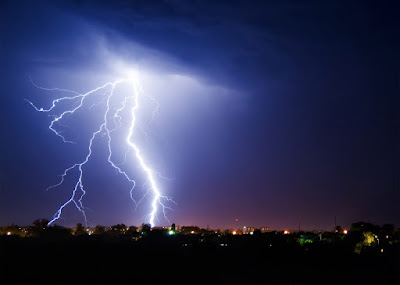
                                        What is Lightening  Lightening is a hazardous phenomenon of nature. Every year it kills more than thousands of people in the world. Simply, we can say that when rain is the art of mother nature than lightening is the fireworks. It happens due to the flash of electricity which is produced by thunderstorms. How lightening happens - Lightening happens due to the reason that when the ground becomes warm it heats the air. As the hot air rises, again and again, the water vapor melts into clouds and there is the creation of an electric charge. The positive charge present on the top of the cloud and negative charge electron present at the bottom of the clouds. At the same time object on the ground have a positive charge. When a negative charge electron from the clouds comes closer to the positive charge proton then the charge is neutral...

Short note on Photosynthesis

Image
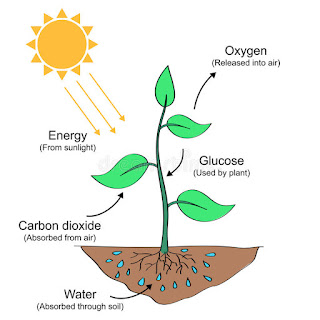
Photosynthesis  On earth, every organism needs food for its survival. Some animals eat plants as a source of food and some animals eat another organism as food. Similarly, plants also need food for their survival and they make their food on their own by taking sunlight as a source of energy and convert it into chemical energy. This process is called Photosynthesis . The word Photosynthesis is generally divided into two parts photo - light and synthesis - to make. Things Need For Photosynthesis - For the photosynthesis reaction to occur there are generally three things to be needed - Water Carbon Di Oxide Oxygen Process Of Photosynthesis - The process of photosynthesis generally happens in the leaves of the plant. The leaves of the plant contain chlorophyll in their cells which have one crucial pigment called Chloroplast . This Chloroplast is responsible for giving green color to the leaves of the plant. The process of plant photosynthesis is generally divi...

Biology and characteristics of living things : Biology Blog

                               Characteristics of living beings Welcome to this blog where we will explore the fascinating world of living beings and delve into the realm of Biology. To begin with, let's understand the term " Biology ." The word can be broken down into two parts - "Bio," which refers to life or living organisms, and "logy," which denotes the study of a particular subject. Therefore, Biology is the scientific study of living organisms, encompassing their physiology, anatomy, and distinctive features. Living organisms possess certain characteristics that set them apart from non-living entities. These defining traits include: Growth : Living organisms have the ability to grow internally. Unlike non-living objects that may grow externally, such as mountains with the accumulation of flora, living beings undergo internal growth and development. Reproduction : Reproduction is a vital process for th...