Posts

Human Cloning : The Topic Of Debate
Image
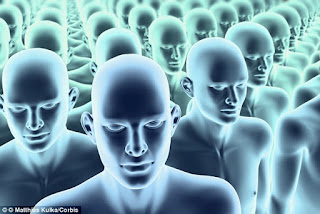
                                Human Cloning   Giving birth to the  identical copies of  the biological entity  by various clone process is known as cloning and when this  process used to produce identical copies of human is known as Human Cloning . But Human Cloning is very controversial in many aspects . This topic becomes the most important aspect of research for the scientist . How Human Cloning Work -  The most preferred method scientist use is somatic cell nuclear transfer in which the egg of the donor person  is taken out  and from this  egg nucleus is removed . Now this egg become unnucleated egg . This egg is ready for fusing with the cloning subject cell by using electricity . Cell which contain DNA is taken out from the person who is  being cloned . Once the two cell get fused  the new cell can be permitted to grow in an su...

Hybridoma Technology: Process, Applications & Monoclonal Antibody Production

Image
                                   Hybridoma Technology  Hybridoma Technology is a method used to produce hybrid cells by fusing a specific antibody-producing B-cell with a myeloma (cancer) cell. The process begins by injecting a specific antigen into a mouse to stimulate an immune response. The antibody-producing B-cells are then collected from the mouse’s spleen and fused with myeloma cells. This fusion results in hybrid cells , known as hybridomas , which have two key properties: the ability to produce a specific antibody (from the B-cell) and the ability to divide indefinitely (from the myeloma cell). The fused cells are then placed in a special culture medium where the unfused myeloma cells die, but the hybridomas survive. This is achieved by using HAT medium (which contains hypoxanthine, aminopterin, and thymidine). Aminopterin in the medium blocks the de novo nucleotide synt...

Mutation

Image
                                             Mutation  A sightly change in the sequence of  DNA  which may be transmitted to further generation caused by  the addition  , deletion or alternation of single base of DNA is  known as Mutation . Classification - Mutation can be classified into two ways Acquired Mutation - The mutation which is not occur in our body but it is acquired from other source are known as Acquired Mutation . For example Ultraviolet rays that sometime cause Cancer in body by mutation in DNA . The only advantage in this type of mutation is that it is not transformed to further generation and  limited in some of the cells of  the body . Hereditary Mutation -  The mutation which is transformed from parents to offspring are known as Hereditary Mutation . When the egg cell and sperm cell unite they ...

Enzyme : classification, mechanism , mode of action

Image
                                            Enzyme Enzymes play a very important role in our life. They are specialized proteins with catalytic activities and a great degree of specificity.  All the living beings need enzymes for their biochemical reaction in which reaction starts with substrate and end in the product . Therefore Enzymes are also called Biocatalyst. Characteristics Of Enzyme - Enzymes are highly specific in nature. All enzymes are proteinaceous in nature. Enzymes always catalyze the reaction. They act actively at optimum temperature. They are colloidal in nature. Inhibitor always inhibits the enzymatic reaction. Enzymes are manufactured in the living cells but they are non-living. E nzyme  Classificatio n - According to the international union of biochemist (IUB), enzymes can be classified into six classes- Oxidoreductase ...

Whittaker's Five Kingdom Classification | Biology Blog

Image
                                   Five Kingdom Classification Early biologists classified all species as either plants or animals. Since this method makes it difficult to research specific creatures, American taxonomist R.H. Whittaker created the five-kingdom classification in 1969. This system divides all organisms into groups based on how they are organized and how they are fed. Important standards for this classification include - The complexity of cell structure i.e. Prokaryotic and Eukaryotic. The complexity of the Organisms body is Unicellular and Multicellular. Mode of nutrition Autotrophs and Heterotrophs. Lifestyle. Phylogenetic Relationship. Based on these criteria, Whittaker classified the living world into the following categories  - Kingdom Monera                 Kingdom Protista Kingdom Fungi Kingdom Animalia Ki...

Recombinant DNA Technology | Biology Blog

Image
                                 Recombinant DNA Technology The technology in which genetic material   is transferred by artificially means from one organisms to genome of another organisms where it replicate and expressed is  called Recombinant  DNA Technology . For Example - The best example to understand this process is Mosquito . Mosquito act as a vector and transfer it's pathogen into human body where it replicate and expressed in form of disease called Fever , Dengue , Malaria etc . Tools Of   rDNA Technology - rDNA technology accomplish only  by  using this key tools -                                                        Restriction Enzyme        Polymerase Enzyme       ...

Green House Effect

Image
                                      Green House Effect