Posts

Kreb Cycle Steps With Diagram , Steps & Products
Image
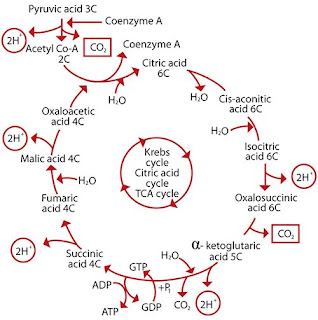
                                            Kreb Cycle  Krebs cycle is also known as the citric acid cycle or tricarboxylic acid cycle(TCA) . It was discovered by H.A.Kreb in 1953. Kreb Cycle cycle occurs in the matrix of the mitochondria . The whole cycle of Kreb is described in the following figure. The net result of the Krebs cycle is that acetyl group entering the cycle as acetyl- CoA, two molecules of carbon dioxide are produced.  Kreb Cycle Steps - Condensation - Acetyl CoA combines with oxaloacetic acid in the presence of citrate synthetase enzyme to form citric acid. It is the first product of the Krebs cycle. Dehydration -  Citric acid in presence of aconitase enzyme is converted into cis-aconitic acid. Water is released here. Hydration - Cis-aconitic acid is converted into isocitric acid with the addition of water in the presence of...
what do you know about virus - Biology Blog

Image
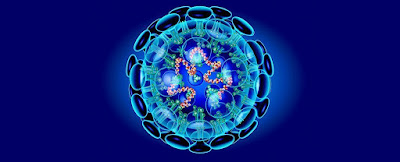
                                              Virus  Viruses are simple noncellular entities consisting of one or more molecules of either DNA or RNA enclosed in a coat of protein. They become active only in living cells and they are intracellular parasites. The size of the virus is 0.02 to 0.03 micrometer but the size of the virus in smallpox is 200nm in diameter which is the largest size of the virus.  A fully assembled infectious virus is called a virion . " The main function of the virion is to deliver its genetic material into the host cells so that the genome can be expressed by the host cell. " Viral Structure - The structure of virions is very diverse, varying widely in size, shape, and chemical composition.  All viruses have a nucleocapsid composed of nucleic acid surrounded by a protein capsid. The capsid is formed as single or doub...

Explain principle of electron microscopy : Biology Blog

Image
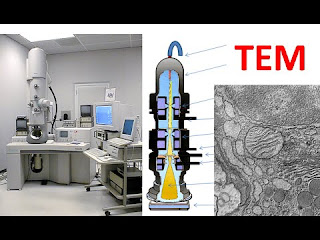
                              Principle of  electron microscopy Around 1931-32, two German scientists, Knoll and Ruska invented transmission electron microscopy and developed a transmission the electron microscope (TEM) around 1940. Principle - A strong beam of electrons discharged from tungsten filaments after supplying them with high voltage electronic current, pass through a vacuum and refocussed electromagnets. Radiation (wavelength 0.05 angstrom) is produced from it which is utilized as a source of illumination to the objects. An image is formed when electrons strike on a fluorescent screen or on a photographic film. Several hundred thousand times magnifications and resolution of about 5 angstroms can be achieved by TEM.  The compound of a transmission electron microscope - Electrogun - it is located on the top of the microscope. It works as a  source of electrons. It con...

Northern blot technique Of RNA - Principle , Steps | Biology Blog

Image
                                           Northern blotting   Hello guys! In this blog, we are going to explore the  northern blot technique . This technique can be used in any viral detection test as the genetic material of the virus is RNA. So, before moving to northern blot we focus on the word - blot. Blo t is basically a technique in molecular biology and genetics in which we DNA/RNA or proteins could be transferred onto the carrier membrane. The nylon membrane or nitrocellulose membrane are used for blotting purpose.  The transferring of molecules like DNA / RNA or proteins to the membrane can take place after gel electrophoresis. After blotting the transferred molecules are visualized.  For visualization, we can use the following methods-  1. If the probe is labeled with the radioactive chemical (32P), it can be observed on...

convolascent plasma therapy for cornonavirus

Image
Hello guys!  The elevating cases of corona in the world forced researchers to discover antibiotics.  scientists experimenting and researching continuously to develop vaccines or therapy that may help to beat the corona crisis. So, one of the therapies that doctors believe to experiment on patients is plasma therapy. Plasma is a watery fluid of the blood. This plasma is consists of corpuscles and thrombocytes in addition to that plasma also contains some proteins (immunoglobulin) which produce antibodies. Our body works on the principle of the immune system. The basic principle of the immune system is that it forms antibodies against any foreign antigen that enters the body. Our immune system memorizes this antigen and this is called the primary response. If the second time again this same antigen comes into the body by any means then our antibody recognizes it and neutralizes this foreign antigen.  This principle is becoming helpful for experimenting against ...

Things to know about pandemic disease coronavirus : Biology Blog

Image
                                        Coronavirus Coronavirus is an infectious disease that is spreading rapidly all over the world. More than 20 lakh people of the world have been affected by this virus and incoming time its chances of increase will be more. It is coming from the Wuhan, the capital of China on 29 December 2019 and since then it is spreading more fastly. Symptoms - Fever, cold, cough, fatigue, diarrhea are general symptoms of this virus.  Older people and the child under 10 years of age are prone to this pandemic disease. The symptoms of this disease will appear between two to fourteen days. The people having a pre-existing disease like cancer, respiratory problems and diabetes have more risk to get the infection. Mode of transmission - This virus is inactive until they do not get any host body to replicate their genome. After entering into the ho...

Explain transgenic animals and ethical issues : Biology Blog

Image
                             Transgenic Animals & ethical issues  Hello guys! on this blog, we are going to discuss what are the transgenic animals and what are the issues related to that. So, guys, transgenic animals are those animals that have their DNA  manipulated so that the extra foreign gene can be expressed. There are multiple examples of transgenic animals like sheep, cows, mice, rats, etc. Reasons for developing transgenic animals -   To the understanding of gene regulation and their effect on normal physiology of the animal and its development. For example, we can study various growth factors. The study of the disease can be done by studying genes, which are responsible for causing disease in human and their treatments. Biological products can be produced by introducing the portion of DNA, which codes for a particular product into transgenic animals. For exa...